A day of loss….. A legacy of courage
By Anthony Collins
LPR Editor
Twenty-five years have passed since a beautiful September morning became one of the darkest days in American history. A quarter-century. Long enough for an entire generation to grow into adulthood with no memory of where they were when the first airplane struck the World Trade Center. Long enough for children born after Sept. 11, 2001, to now have children of their own. But for those who lived through that day, 25 years has done little to dim the memories. Some remember the blue sky. Some remember the smoke. Some remember people standing silently in front of television screens, trying to comprehend something that seemed impossible. But most remember the heroes.
Some wore badges and helmets and ran into burning buildings, while everyone else was desperately trying to get out. Others were soldiers, police officers, paramedics, office workers and strangers helping strangers. And aboard one airplane flying above Pennsylvania that morning, a group of ordinary passengers and crew members made a decision that certainly saved countless lives. They were the passengers and crew of United Airlines Flight 93. But before their final act of courage unfolded, Americans had already watched the attack spread beyond New York City.
At 8:46 a.m., American Airlines Flight 11 struck the North Tower of the World Trade Center. At 9:03 a.m., United Airlines Flight 175 slammed into the South Tower. Then came another horrifying blow on live television. At 9:37 a.m., American Airlines Flight 77 crashed into the western side of the Pentagon in Arlington, Virginia.
Flight 77 had departed Washington Dulles International Airport that morning bound for Los Angeles. The Boeing 757 carried 64 people, including the five hijackers who seized control of the aircraft. The plane struck the Pentagon at high speed, tearing through portions of the massive building and igniting a devastating fire. All 59 innocent passengers and crew members aboard the aircraft were killed, along with 125 people inside the Pentagon. In a matter of seconds, 184 innocent lives were gone.
The Pentagon is a symbol of American military strength, but on that morning its hallways became scenes of smoke, fire and unimaginable loss. Military personnel and civilian employees rushed to help the wounded. First responders entered the burning structure. Survivors helped coworkers through darkened corridors and broken offices. For families waiting for loved ones to call home, the Pentagon became another place where an ordinary Tuesday morning ended in heartbreak. By then there could be no doubt. America was under attack.
And somewhere in the sky, another hijacked airplane was still flying. United Airlines Flight 93 had left Newark, New Jersey, that morning bound for San Francisco. On board were seven crew members and 33 passengers, men and women ranging in age from 20 to 79. They were businesspeople, students, retirees, parents, sons, daughters, husbands and wives. Most were strangers to one another when they boarded the airplane. None boarded expecting to become heroes. But history rarely gives people advance notice when it is about to ask something extraordinary of them. At 9:28 a.m., terrorists took control of Flight 93.
Passengers and crew members were forced toward the rear of the aircraft. Soon, they began making telephone calls to family members, friends and authorities. Through those calls, they learned what had happened. Two airplanes had struck the World Trade Center. Another had crashed into the Pentagon. And suddenly the people aboard Flight 93 understood something terrifying. Their airplane was almost certainly not being hijacked for ransom. It was a weapon.
Try to imagine that moment. Imagine sitting aboard an airplane and hearing the voice of someone you love to tell you that other hijacked aircraft had been deliberately flown into buildings. Imagine looking around the cabin and realizing the men in control of your airplane intended to do the same thing. Imagine knowing the conversation you were having with your husband, wife, mother, father or child might be your last. There were goodbye messages. There were expressions of love. There were prayers. And then there was a decision.
The passengers discussed what they knew and decided they would not simply remain seated and wait to discover where the hijackers intended to take them. They chose to fight.
At approximately 9:57 a.m., the passengers and surviving crew members began their assault toward the cockpit. The hijackers violently rolled the aircraft from side to side and pitched it up and down to throw the passengers off their feet. Still, they kept coming. They knew what had happened at the World Trade Center. They knew what had happened at the Pentagon. And they knew what could happen if they did nothing.
The cockpit voice recorder captured the sounds of the struggle as the passengers fought their way forward. The hijackers eventually realized the passengers were closing in. At 10:03 a.m., United Flight 93 crashed into a field near Shanksville, Pennsylvania. Everyone aboard was killed.
Investigators concluded the aircraft was headed toward Washington, D.C., with the U.S. Capitol or White House considered the likely targets. It never made it there.
The passengers and crew could not save themselves. So, they saved people they would never meet. That may be one of the purest definitions of heroism ever written. They had no uniforms. They had no weapons. They had no organized plan waiting for them when they boarded the plane that morning. They were simply ordinary people confronted with an almost unimaginable choice. And they chose each other. They chose the lives of strangers on the ground. They chose to fight. Their sacrifice was one chapter in a day filled with extraordinary courage. In New York, firefighters climbed stairwells inside the burning towers while thousands rushed down them. Among them was my friend, FDNY Lt. Vincent G. Halloran of Ladder 8. Halloran was a 20-year veteran of the New York City Fire Department, a husband and father of five with another child on the way. He had served with Engine 262 and Engine 43 before leading Ladder 8. Like hundreds of firefighters that morning, he went to work not knowing that Sept. 11 would be his final alarm. He was killed while helping evacuate the North Tower.
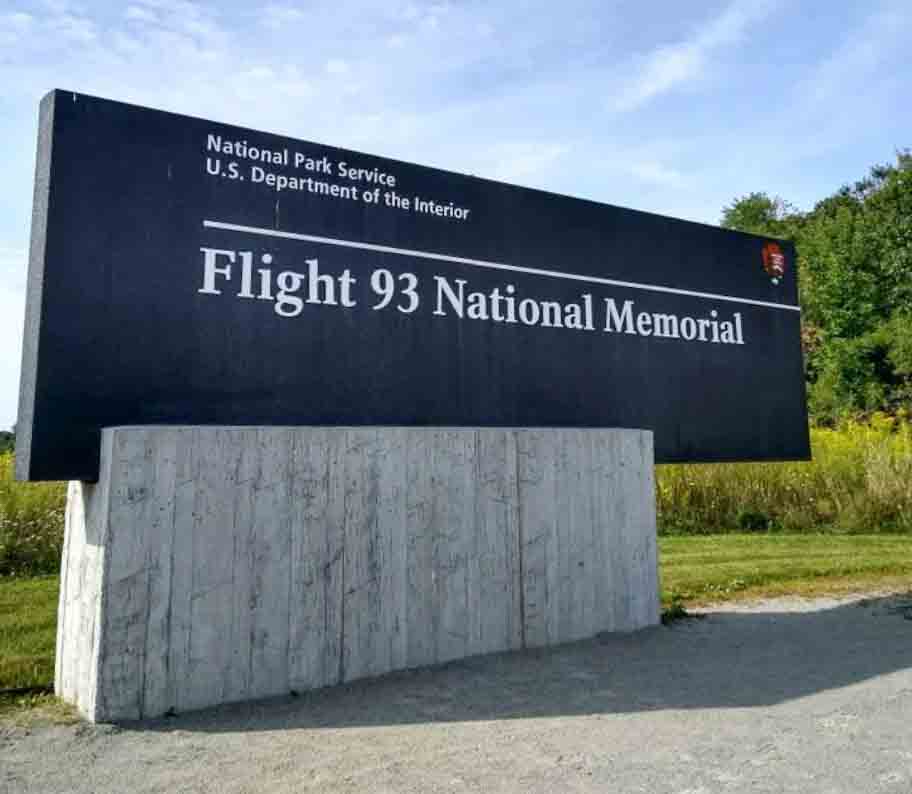
At the Pentagon, military personnel, civilian employees and firefighters faced their own inferno, searching through smoke and debris for coworkers and strangers. And in a field outside Shanksville, Pennsylvania, the wreckage of Flight 93 marked the place where 40 passengers and crew members refused to allow another American landmark to become a target.
Twenty-five years later, statistics still cannot tell their stories. The official death toll from the attacks is 2,977 innocent victims. But numbers are cold things. They do not tell you about the empty chair at Thanksgiving. They do not tell you about children growing up without fathers or mothers. They do not tell you about a widow reaching for a telephone that will never ring again. They do not tell you about firefighters whose lockers remained untouched after their final shift. They cannot describe a family waiting to hear whether someone escaped the Pentagon. And they cannot tell you what it must have taken for the people aboard Flight 93 to end a telephone call with someone they loved, stand up from their seats and begin moving toward the cockpit knowing they might never come back.
Twenty-five years can change a country. Buildings can be rebuilt. Wars begin and end. Children can grow up. Technology can transform the way we live, and memories that once seemed impossibly sharp can soften around the edges. But time should never be allowed to erase the people. That is why we say their names. That is why bells still ring. That is why firefighters still climb stairs each September in memory of those they never met. That is why people gather at the Pentagon Memorial beside 184 illuminated benches honoring the victims killed there and aboard Flight 77. And that is why families still gather in a quiet Pennsylvania field where the names of the passengers and crew of Flight 93 are carved into white marble.
Sept. 11 also reminded many of something that is easy to take for granted in the routine of everyday life: freedom is never guaranteed. In the days that followed the attacks, Americans hung flags from front porches, stood in long lines to donate blood, prayed together and reached across differences that suddenly seemed far less important. It is inheriting freedoms purchased and protected by generations before us and accepting the responsibility to preserve them for those who will come after us. The terrorists who attacked our country wanted fear to define America. Instead, they reminded us of the strength found in our freedom, our compassion for one another and our willingness to stand together when it matters most. Twenty-five years later, perhaps one of the best ways we can honor those who died is to never again take for granted the privilege of living in a nation where freedom remains worth protecting.
Most importantly, it is why 25 years later America must remember what happened that morning, not simply how people died, but how so many chose to live their final moments. Helping. Rescuing. Protecting. Fighting back. The passengers and crew members aboard Flight 93 did not know whether they would succeed. They simply knew they had to try. In the final moments of their lives, when fear would have been understandable and surrender would have been human, they stood together and fought.
Because of them, another airplane did not reach its intended target. Because of them, another American building was not struck. Because of them, countless families were spared the telephone calls that thousands of others received that morning. Because of them, a field in Pennsylvania became sacred ground. Twenty-five years later, we remember the towers. We remember the Pentagon. We remember Shanksville. We remember the first responders who climbed when others descended. We remember the 184 innocent people murdered at the Pentagon and aboard Flight 77. And we remember the passengers and crew of Flight 93 who began that morning as strangers and ended it standing together. They were ordinary Americans living ordinary lives on an ordinary Tuesday morning. Then history called. And they answered. May we never forget them.