The Latin American Story Behind Halloween
By Anthony Collins
LPR Editor
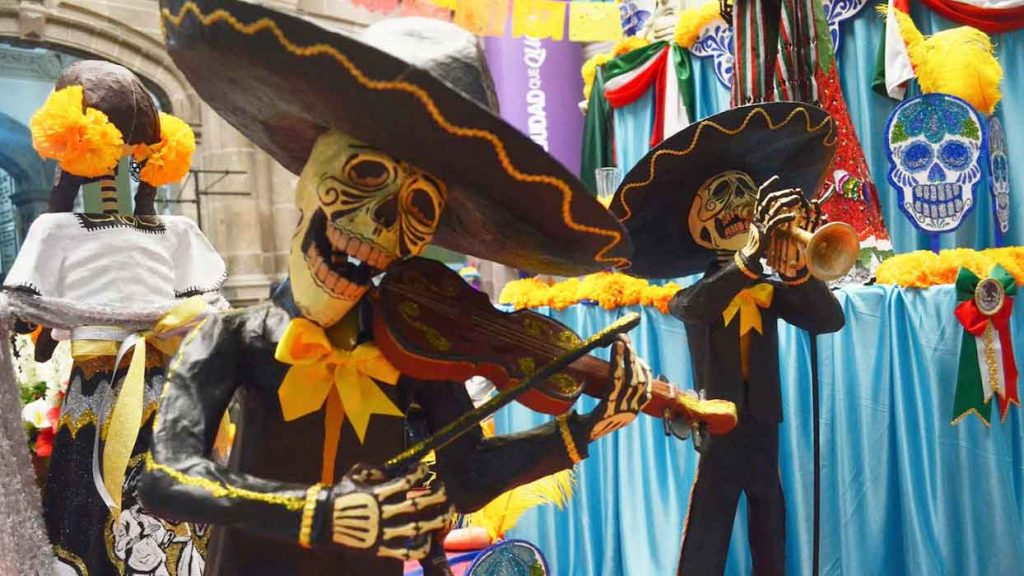
As October winds down across Latin America, the nights fill with color, candles, and celebration. Kids might be getting ready for Halloween with costumes and candy, but throughout the region, families are also preparing for something far older, the honoring of the dead, a tradition that has deep roots in Latin American history and culture.
While Halloween came to Latin America from the United States, many countries in the region already had their own ways of remembering and celebrating those who had passed on. These customs, passed down from the native people long before European colonization, see death not as something to fear but as a natural part of life.
Civilizations like the Aztecs, Maya, Inca, and Quechua held festivals that celebrated the souls of the dead, often around the time of harvest. They believed spirits could return to visit their families, and people offered food, drink, and gifts to welcome them back. Death, to them, wasn’t an end, it was a continuation of the human journey.
When the Spanish and Portuguese colonizers arrived in the 1500s, they brought with them Catholic traditions like All Saints’ Day (November 1) and All Souls’ Day (November 2). Over time, these blended with native beliefs across the Americas, giving rise to local variations of what we now recognize as Día de los Muertos, or the Day of the Dead.
In places like Mexico, Nicaragua, Peru, Bolivia, and Ecuador, families create colorful altars, known as ofrendas or mesas, filled with candles, flowers, photos, and the favorite foods of departed loved ones. In the Andes, communities visit cemeteries with music, food, and even picnics to share a meal “with” their ancestors. In some Caribbean countries, families hold nighttime vigils filled with singing and prayer. The details may be different, but the message is the same: love never dies.
Halloween, or “Noche de Brujas” (Night of the Witches), arrived later through television, movies, and cultural exchange with the United States. By the late 20th century, dressing up in costumes, carving pumpkins, and trick-or-treating became common in cities across Latin America, especially in urban areas and along the U.S. border. Today, you’ll find both celebrations side by side: kids going door to door for candy on October 31, and families lighting candles for their ancestors on November 1 and 2.
Some worry that Halloween might overshadow traditional customs, but most people see it differently, as a fun addition to a sacred time of year. In true Latin American spirit, the region has managed to blend both celebrations into something unique. Halloween brings laughter, costumes, and imagination; Día de los Muertos and similar ceremonies bring remembrance, faith, and connection.
From Mexico’s colorful skulls to Nicaragua’s giant paper kites, to Bolivia’s bread figurines and Ecuador’s sweet colada morada (spiced purple corn and fruit drink), each country adds its own flavor to the season. Together, they show that in Latin America, life and death are forever intertwined, one celebrated with joy, the other with memory, but both with love.
So, when late October arrives and the air turns crisp, Latin America doesn’t just celebrate Halloween, it also celebrates heritage, family, and the powerful belief that our loved ones are never really gone, just waiting on the other side.