Thousands of new homes on the horizon as major developments move forward
By Anthony Collins
LPR Editor
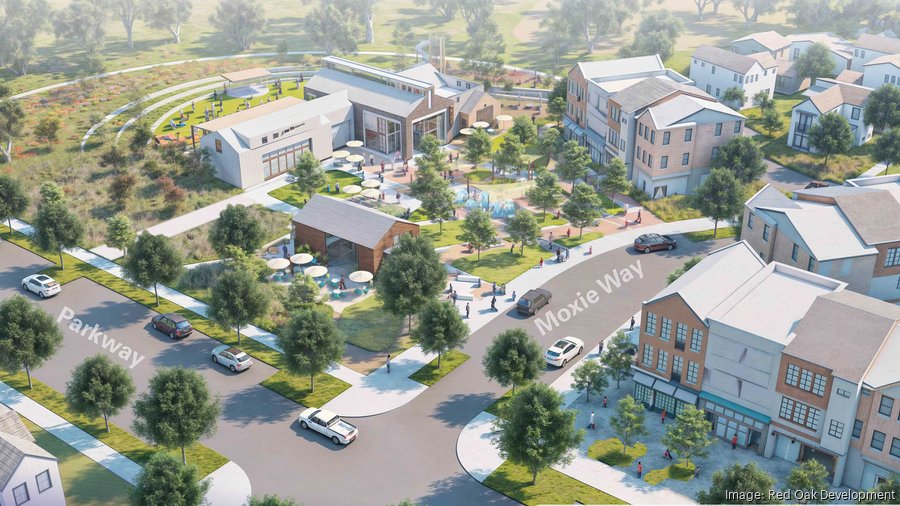
Above, The Moxie development, a 589 acre community, will be located near FM 1322 and Seawillow Rd. Courtesy Photo.
For years, Lockhart residents have heard about the growth coming their way. Now, much of that growth is moving from planning documents to construction sites, and the city faces important decisions about what comes next.
Thousands of new homes are planned throughout the Lockhart area, bringing the promise of new families, businesses and economic opportunities. But those opportunities raise questions about whether the city’s roads, schools, utilities, and other services can keep pace.
The latest step came Thursday night, Oct. 8, when the Lockhart City Council approved a zoning change involving the Spencewood property, part of the massive Hillwood Communities development now known as Harken. The decision moves another portion of the proposed development forward and adds to a growing list of residential projects that could dramatically change the community over the next decade.
The council’s decision involved approximately 74.34 acres along North Colorado Street, between the 2100 and 2600 blocks, changing the property’s zoning from agricultural-open space and flood hazard classifications to a Planned Development District. The request was submitted by Spencer Gourley on behalf of Spencewood Inc.
Although the approval applies to only a portion of the larger development, it is another step toward bringing Harken to Lockhart. Hillwood’s overall plans cover approximately 1,105 acres between Dry Creek Road and U.S. Highway 183, with an estimated 2,600 to 2,700 homes expected over the life of the project. The development also includes approximately 38 acres set aside for multifamily housing and commercial uses. Hillwood has outlined a construction schedule extending 10 to 15 years, with initial infrastructure work targeted for summer 2027 and roughly 450 home lots in the first phase expected to be ready by fall 2028. Those dates could change as the project moves forward, but the size of the development alone gives an indication of how much Lockhart could change in the years ahead.
Harken is being planned as more than a collection of residential streets and houses. Hillwood’s proposal includes parks, walking trails, recreational areas, gathering spaces, and other amenities intended to give residents places to spend time within their own neighborhood. The company has also discussed bringing in several homebuilders to offer different housing options and price ranges.
One of the more significant issues surrounding the project is who will pay for the infrastructure.
Developments of this size require extensive road construction, water lines, wastewater facilities, and drainage improvements before homes can be occupied. City officials and developers have discussed financing options involving a municipal utility district and a tax increment reinvestment zone. Those discussions matter because the arrangements ultimately approved could determine how much of the infrastructure expense is carried by the development and how much responsibility remains with local government. With the zoning change now approved, residents will likely be watching closely as the project moves through its next stages.
Across town, another development is already taking shape near State Highway 130 and Boggy Creek Road. Blue Sky, a master-planned community being developed by Austin-based Wilson Capital, covers roughly 930 acres and is expected to include more than 3,500 single-family homesites. Plans also call for commercial and multifamily development, recreational areas, walking trails, community gathering spaces, and property designated for a possible future elementary school. The development is being marketed for a 2027 arrival, although construction will continue in phases over an extended period. Its location near SH 130 could appeal to families looking for a home outside the Austin area while maintaining access to jobs throughout Central Texas.
For Lockhart businesses, that could mean thousands of potential new customers. For residents who already use the surrounding roads, it also raises the question of what traffic will look like when large numbers of new households begin making their daily commutes.
East of town, the Moxie development is another project that could bring significant residential growth to Lockhart. Located near FM 1322 and Seawillow Road, the approximately 589-acre community is being developed by Red Oak Development Group and is planned to eventually include around 2,500 homes. The first phase covers approximately 89 acres and includes 413 single-family residences. Developers envision a community with neighborhood parks, walking trails, open spaces, and a future mixed-use town center called The Crossing. The idea is to create a neighborhood where residents can enjoy outdoor activities and have access to some everyday conveniences closer to home. But Moxie’s location also puts it in an area where school enrollment and public infrastructure will need continued attention. Lockhart ISD is already preparing for growth on this side of the district, with Seawillow Middle School scheduled to open in August 2027. As additional neighborhoods are developed, the district will have to keep evaluating how many students those communities could bring and where those students will attend school.
While several of these developments are still working toward their first residents, Juniper Springs is giving Lockhart a look at what the next chapter of residential growth may resemble.
The community near Borchert Loop is expected to eventually include approximately 1,400 homes, along with parks, recreational amenities, and other neighborhood features. Homes are already being marketed in the development, and the surrounding area has seen changes with the opening of Borchert Loop Elementary School in 2025.
Another project connected to Juniper Springs is Wildflower, a 117-home rental community being developed through a partnership involving Upward Communities and Lockhart ISD. The project is intended to offer more attainable housing opportunities for teachers and other school district employees. That is an issue the district has been dealing with for some time, as many employees commute from surrounding communities rather than living in Lockhart. Finding housing that fits their budgets can be difficult, especially as home prices and other living expenses continue to put pressure on working families.
And those are not the only developments on the table. In September, city leaders also reviewed plans involving Ventana Vista, a proposed residential development covering approximately 420 acres east of State Highway 130. That project remains in the planning stages, but it is another indication of the interest developers have in the Lockhart area. Looking at Harken, Blue Sky, Moxie, and Juniper Springs alone, the proposed developments account for approximately 10,000 homes when fully built out. That does not include Ventana Vista or the smaller subdivisions being planned and constructed throughout the community. Of course, those 10,000 homes will not appear overnight. Some projects could take well over a decade to complete, and housing demand, financing, construction costs, and market conditions will influence how quickly developers move forward. Still, even if only a portion of those homes are built in the coming years, Lockhart could see a noticeable increase in population and demand for city services.
There are advantages to that kind of growth. More residents mean more people shopping at local businesses, eating at restaurants, using professional services, and contributing to the local economy. Additional rooftops can also make Lockhart more attractive to businesses that might not have considered opening here several years ago.
New commercial development could create jobs and generate additional sales tax revenue, while an expanded housing market could provide more choices for families looking to move to the area. But growth does not come without its challenges. Roads that handle today’s traffic could become increasingly congested as new neighborhoods fill up. Police, fire, and emergency medical services may need additional personnel and equipment. Water availability, wastewater treatment, and drainage will also remain important considerations. The city will need to make sure its infrastructure is ready to serve these neighborhoods, rather than trying to catch up after families have already moved in.
The same concerns apply to Lockhart ISD, which has already made substantial investments in new facilities and improvements to existing campuses. As residential construction continues, district leaders will have to determine where future students are likely to live and whether current building plans will be enough to accommodate them. Harken’s developers have discussed the possibility of land for a future elementary school, but those conversations do not mean another campus has been approved. Superintendent Dr. Mark Estrada has previously pointed out that the school district is not responsible for approving residential developments. Its responsibility is to prepare for the students who will eventually live in those neighborhoods. The challenge for the district will be planning far enough ahead to avoid overcrowding while making responsible financial decisions based on actual enrollment growth.
Another concern is whether people who already call Lockhart home will be able to afford to stay. New subdivisions may increase the number of houses available, but that does not necessarily make homeownership easier for local families.
The cost of buying a home involves more than the purchase price. Mortgage payments, property taxes, insurance, and neighborhood fees can make even a modestly priced new house difficult to afford. For young families hoping to purchase their first home, retired residents living on fixed incomes, and workers employed in Lockhart, affordability remains a real issue.
The Wildflower project at Juniper Springs is one example of an effort to address workforce housing needs, but the broader question is whether future developments will offer realistic options for people earning local wages. Adding thousands of homes could help meet demand, but the price and type of those homes will determine who can actually live in them.
For longtime residents, the changes may bring mixed feelings. Lockhart has always had a strong sense of identity, built around its historic downtown, locally owned businesses, community traditions, and families who have lived here for generations. There is a reason people are drawn to this community, and many of those qualities have little to do with new subdivisions or shopping centers. At the same time, cities change. Families grow, businesses expand, and new residents arrive looking for many of the same things that brought earlier generations to Lockhart. The question is how the community manages that change. Growth can provide opportunities that might not otherwise exist, but it also requires planning, communication and an understanding of how today’s decisions will affect residents years from now.
Thursday’s approval of the Spencewood zoning change is one more step in that process. Harken, Blue Sky, Moxie and Juniper Springs are different developments with different schedules, but together they represent a shift in what Lockhart may look like in the future. There is still plenty of work ahead before most of the planned homes are built, and the coming years will bring more discussions about roads, schools, utilities, and the cost of serving a growing population. For city leaders, developers and residents, those conversations will be just as important as the houses themselves. Lockhart is going to change. The decisions being made now will help determine how well the community handles it. Also how many of the Lockhart people remain part of the city’s tomorrow.