Missing college student, Jason Landry, has been found
Still, so many questions surround his disappearance
By Anthony Collins
LPR Editor
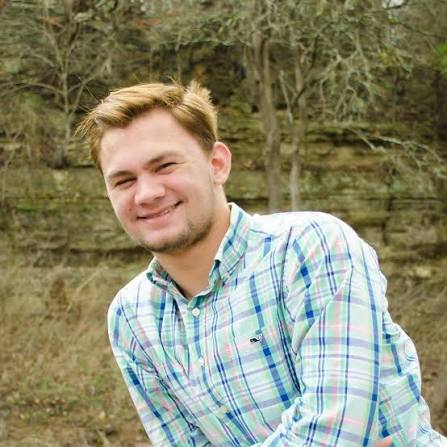
The case of Jason Landry developed into a much bigger story than just a local college student gone missing.
For six years, news agencies, theorists,s and criminal professionals have taken an interest in the case of the boy who was going home for the holidays, but somewhere along the way he became lost or disoriented, wrecked his vehicle, and seemed to have just vanished into the night. But many think there is much more to the story.
For nearly six years, the disappearance of Texas State University student Jason Landry left his family, investigators, the Caldwell County community, and beyond with a question that never went away: Where was Jason? That question finally has an answer. Human remains, discovered September 8 in rural Caldwell County, are those of Jason Landry, the 21-year-old who disappeared after crashing his car outside Luling in December 2020. The Texas Attorney General’s Office (TAGO) announced the identification confirmation on September 23, bringing a major development to one of Central Texas’ missing-person investigations.
But while the discovery ends the search to find Jason, it has not completely answered what happened to him. If anything, it has renewed questions about decisions made during the critical first hours after the crash was reported and about investigative steps local law enforcement has been asked to explain by the Lockhart Post-Register (LPR).
According to the TAGO, a resident discovered skeletal remains east of Salt Flat Road between Soda Springs and Biggs Road. The remains were submitted for forensic testing, and DNA analysis conducted by the University of North Texas Center for Human Identification conclusively confirmed they belonged to Jason. Investigators said the condition of the skeletal remains has not provided additional insight into either the cause or manner of his death. Authorities also said they have found no indication of foul play, and officials have not publicly announced a cause or manner of death.
With the recent identification of Jason’s remains, renewed interest in the case has resurfaced with the same unanswered questions from 2020 and now new unanswered questions about the case. Wanting to see if some of those questions could be answered, the LPR sent a series of questions to the Caldwell County Sheriff’s Office (CCSO) to answer, which can be found throughout this article.
Jason disappeared late Dec. 13, 2020, after leaving his apartment in San Marcos and beginning the drive to his family’s home, 165 miles away in Missouri City for Christmas break. Investigators later reconstructed much of that trip using digital evidence. The CCSO said Jason left at approximately 10:55 p.m., passed through Martindale around 11:11 p.m., crossed State Highway 130 around 11:15 p.m., and entered Luling at approximately 11:24 p.m. Investigators said that as he passed through the Hackberry Street intersection, he stopped using the Waze Navigation application and began using Snapchat. His digital footprint ended near Austin Street and U.S. 183, also known as Magnolia Avenue. Investigators believe he continued straight instead of turning toward Interstate 10, eventually traveling onto Spruce Street and then Salt Flat Road.
After midnight on Dec. 14, the first known report of Jason’s wrecked Nissan Altima was dispatched to the CCSO. Dispatch records place the initial call at approximately 12:31 a.m. A volunteer firefighter reported finding a vehicle off the roadway and that it had struck a fence. The caller told dispatch that clothing, shoes, and a backpack were scattered along the road and the driver was not in the vehicle. He proceeded to search farther down Salt Flat Road without finding anyone. Noticing the items in the roadway and their placement, the caller expressed concern that the missing driver could be outside in the cold, naked, and in danger. That information alone has the public asking why a search was not immediately initiated.
Caldwell County dispatch contacted Texas Department of Public Safety (TDPS) Trooper Cristobal Flores to respond. Records indicate Flores was dispatched at approximately 12:33 a.m. At 12:4,5 Flores advised that it could take about an hour to reach the rural location, but records place his arrival at 1:17 a.m. One major question is why, after being told the responding trooper could be nearly an hour away, did dispatch not immediately send other available law enforcement agencies to a scene where the driver of a wreck with suspicious details could not be found. According to CC , there were three officers on duty. Two were later assigned to a call at 12:52 a.m. that ended at 1:15 a.m. At 1:27 a.m., a CCSO deputy arrived at the Salt Flat Road scene, checking the immediate area, abandoned residences,s and clearing the scene at 2:11 a.m. Whose call was it to make that decision, dispatch, or should Flores have advised dispatch to send someone else to respond quicker? Also, given the circumstances, does a 45-minute search seem like enough time to locate someone possibly in duress?
At approximately 1:53 a.m. Flores requested assistance from the Luling Police Department to check the area of FM 1322 and FM 86 for Jason. CCSO states they cannot say why another law enforcement officer was not requested to arrive earlier. Motor vehicle crashes are generally handled by TPDS.
Nearly six years have passed since Jason disappeared, yet agencies have not publicly answered several questions about the initial response. The TDPS declined an interview previously on Flores’ behalf, as did CCSO until now. There may have been legitimate operational reasons for the actions taken. There is no evidence that a quicker law enforcement response would have changed the outcome, and it would be unfair to claim that it would have. But the absence of proof that a different response could have saved Jason does not eliminate the need to explain why the response unfolded as it did.
Flores examined the vehicle and its immediate belongings after arriving at the scene, noting that the engine was off, but the keys were still in the ignition, and the vehicle’s headlights were shining. Body-camera footage later released by investigators showed Flores handling items associated with the crash, taking possession of marijuana found among Jason’s belongings, and arranging for the vehicle to be towed. The clothing and other belongings detailed by the caller and seen by Flores were left along the roadway. The initial scene and the response to it would later become one of the most scrutinized portions of the investigation.
At 1:38 a.m. on December 14, Kent and Lisa Landry, Jason’s parents, were notified that Jason’s car and belongings had been located. They were also asked if they had heard from their son or knew his whereabouts. They had not in recent hours. In a Texas Monthly article from July 2025, it stated that Flores told the couple that he’d found “narcotics” in Jason’s backpack. “He may be under the influence, and because of that, maybe that’s why he took his clothes off, if those are his clothes in the dirt road,” Flores told them. “With the way the temperatures are out here in the dark country, clear night, it feels like it’s thirty-some-odd degrees, especially with the way the winds have been blowin’.”
Kent made the trip to Luling while Lisa remained at home in case Jason arrived. Kent has stated in interviews that he was prepared to help search for his son upon arrival, even bringing a blanket and other clothing items for Jason. After not being able to accurately locate the crash site, Kent advised Lisa to contact Flores for the exact location. Lisa later said that when she called, the trooper had already gone home and was in bed. Kent stated Flores left no instruction or report for his shift relief that there was a case that needed attention.
By the time Kent arrived at Salt Flat Road near daybreak, he was surprised that there was no search underway and to find that there were no law enforcement personnel at the scene. Being a lawyer, Kent began documenting the area himself. Approximately 900 feet from the crash, he discovered the same clothing that had been left by Flores that he believed to have been worn by his son, including a shirt, shorts, socks, underwear, slide sandals, and a wristwatch. Kent collected the items as he stated it could be considered potential evidence.
Later that morning, when he got access to Jason’s car, he found his son’s cellphone, a critical piece of evidence, still lodged between the driver’s seat and the center console. In the first few hours after Jason’s disappearance, generally the most crucial period in any missing persons case, Kent felt like he was almost entirely on his own. In fact, an organized search involving Texas Search and Rescue (TEXSAR) didn’t begin until 2:15 p.m. on December 14, over 14 hours after the original call. This also included K9 resources, ground searches, drones, infrared technology a,nd other specialized equipment.
In the same Texas Monthly article, Lisa said Flores told her that when someone leaves the scene of an accident, police assume they have something to hide. Kent said law enforcement seemed to stop caring about his son’s whereabouts the moment they discovered marijuana in his backpack. “Regardless of whether Jason was drunk, stoned, or any of the above,” Kent said, “you had what you thought was a naked college student wandering in a place he did not know in freezing-cold weather with arctic winds. You need to find that person and save them from themselves. However, they got in that situation; find them and help them.”
This information raises more questions about how the scene was treated during those first hours. The clothing was not discovered miles away or weeks later. It was found roughly 900 feet from the crash, and the original caller had already told dispatch that clothing and other items were scattered in the roadway.
Those facts were early indications that the driver may have left the vehicle under unusual or suspicious circumstances. Yet there was no immediate large-scale or small-scale search for Jason during the overnight hours. Again, that does not establish misconduct, but it does make the decision-making of that night deserving of scrutiny, particularly now that Jason’s remains have been found years later in the same broader rural region.
The CCSO would eventually admit that when officers left the crash site the night of Jason’s disappearance, a critical period for searching was lost. Kent couldn’t help but wonder if things might have turned out differently had the response been more urgent.
Investigators, processing the clothing and other items, identified a small blood smear, but authorities said it was not consistent with a significant injury and could have resulted from contact with a fence or vegetation. No substantial blood evidence indicating a major injury was reported inside the car. Investigators ultimately concluded Jason had apparently lost control of his car on the gravel surface, overcorrected, and left the roadway. The car struck a tree before colliding with another tree and barbed-wire fencing. State investigators later said they found no evidence that another vehicle was involved. But determining how the crash occurred never answered what happened after Jason got out of the vehicle.
The LPR also asked the CCSO whether investigators had questioned people in the area of Luling where Jason is believed to have made the wrong turn, or whether nearby landowners were interviewed about anything they may have seen or heard that night. That question was raised after Kent was asked whether kidnapping or murder had ever been ruled out. He said many theories had been suggested and that none could be completely dismissed simply because so much about the case remained unknown. The LPR also asked CCSO whether investigators canvassed the area where Jason’s known route changed, including whether residents, property owners, or others were asked if they encountered him or noticed anything unusual. CCSO stated investigators considered the possibility of Jason encountering another person after traveling through Luling and onto Salt Flat Road. While numerous theories have been considered, evidence does not support that he met or encountered anyone else. Public records released over the years show investigators tirelessly interviewed witnesses, reviewed digital evidence, examined cellphone and social-media data, and pursued numerous leads. The TAGO Cold Case and Missing Persons Unit later said it found no evidence that Jason had arranged to meet anyone in Luling and no evidence another vehicle was involved in the crash. But the public still does not know how extensively residents and landowners along Jason’s route were canvassed, who was interviewed, or how quickly those interviews occurred.
When asked whether the CCSO or TAGO had reached out to private investigators, independent searchers, or others who developed theories they believed were scientifically plausible, the CCSO responded that any credible information or theories related to the case have been reviewed. Over the years, Jason’s disappearance drew attention from private investigators, volunteer search teams, citizen researchers, and others, near and far, who proposed possible explanations based on mapping, environmental conditions, search coverage, and Jason’s possible movement away from the crash site. The LPR asked CCSO whether law enforcement reviewed or collaborated with those individuals or formally evaluated those theories.
Law enforcement agencies, family members, professional search organizations and private citizens repeatedly returned to Caldwell County. On January 25, 2022, more than a year after Jason disappeared, Caldwell County Sheriff Mike Lane formally requested assistance from the Texas Office of the Attorney General. The CCSO remained involved in the case and continued working alongside the TAGO and other agencies.
In November 2023, specialists from multiple agencies took part in another extensive review of the investigation. The review brought together expertise in digital forensics, geospatial sciences, mapping and criminal intelligence and included personnel associated with the FBI, Texas Rangers, TDPS, TEXSAR, the Caldwell County District Attorney’s Office and Travis County Constable Precinct 3. Investigators concluded the credible leads available at the time had been thoroughly pursued. It does not, however, answer those many questions about what was done, or not done, during the first hours and days after Jason disappeared.
The physical search was enormous, eventually totaling over 31,000 acres. Early in the investigation, CCSO reported that TEXSAR alone had covered more than 3,900 acres using ground, horseback, and canine search teams and another approximately 16,900 acres with drones, fixed-wing aircraft, and helicopters. Searchers used Forward Looking Infrared technology, human-remains detection dogs, and other specialized equipment. Volunteers repeatedly returned to rural Caldwell County, often donating their own time and resources. Texas EquaSearch also participated in early search efforts.
Two days after Jason’s disappearance, much of the search effort was focused on a small pond about a thousand yards from the crash site. Dogs had signaled that there might be human remains in the water. After a boat equipped with a sonar device detected something not far offshore, a dive entered the pond, but it found no sign of Jason. After securing permission from the landowner and pumping equipment from nearby oil operators, searchers drained the entire pond, a days-long process. Independent citizen search teams continued looking for Jason during the months and years that followed. The search became deeply personal for many volunteers who spent countless hours walking fields, oil leases, wooded areas, and roadways. Yet nothing located Jason.
The location where the remains were found was only 4-5 miles from the crash site and outside where investigators and volunteers had spent years searching. Without detailed official search-grid maps, the precise distance between previous search boundaries and the recovery site should be treated cautiously. When asked if the location of the remains was in the search grid, but the landowner had denied access, the CCSO stated that the remains were recovered outside the areas that had been previously searched. Law enforcement was never denied access to the property by the owner, as it was never attempted to be searched.
The identification answered the question that had driven the case, but it did not answer everything. Authorities have not publicly determined that exposure, injuries from the crash, hypothermia, or any other particular cause resulted in his death. Nor does the recovery of Jason’s remains prove that steps taken immediately after the crash report caused his death or that a different response would have saved him. The evidence does not support either conclusion
LPR asked the CCSO if the case is considered closed, and the response given was that the missing-person portion of the case is closed. But that does not mean the entire investigation is considered closed. CCSO stated there are still matters that must be completed and consideration of other evidence that may assist in determining what occurred after the crash.
Currently, the priority of the CCSO is to ensure the investigation is completed thoroughly. Any decision to conduct additional searches will be based on various circumstances of the recovery. If searches are determined appropriate, that decision will be coordinated by the law enforcement agencies involved.
Investigation Timeline of Jason Landry: 2020-2026
•December 13, 2020-Jason leaves San Marcos for Missouri City.
• Dec. 14, 2020:12:31a.m.-– A crashed car is reported in the 2300 block of Salt Flat Road near Luling. TDPS is dispatched with an estimated time of arrival of 1 hour.
• Dec. 14, 2020:1:17 a.m.– Officer arrives on the scene. Police body-cam footage shows officer surveying the immediate area and belongings inside the car. It appeared that the driver, Jason, overcorrected on the gravel surface and spun off the roadway, hitting a tree with the rear driver’s side before colliding with a second tree and a barbed-wire fence.
• Dec. 14, 2020: 1:27 am-CCSO deputy arrives at the scene and checked immediate surroundings, abandoned homes and leaves by 2:11 a.m.
• Dec. 14, 2020: 1:38 am-Contact with Jason’s parents is made by Flores.
• Dec. 14, 22020: Contact cannot be made with Jason’s cell phone, and CCSO dispatch contacts Verizon to have a track made from pings. Other digital footprints were used as well.
Those findings include:
•10:55 PM: He leaves San Marcos.
•11:05 PM: He passes under Interstate 35 on Highway 80.
•11:07 PM: He enters the county.
•11:11 PM: He drives to Martindale.
•11:15 PM: He passes over SH 130.
•11:21 PM: He passes through the Stairtown area.
•11:24 PM: Jason enters Luling city limits on Highway 80. His navigation app stops tracking or loses signal near the intersection of Highway 80 and Austin Street.
•11:24:30 PM (Approximate): At the intersection of Hackberry Street, Jason closes the Waze application and opens Snapchat.
•11:31 PM: The absolute end of Jason’s digital footprint occurs near the intersection of Austin Street and U.S. Highway 183 (Magnolia Avenue). He receives a Snapchat message from a friend, after which his phone data stops transmitting.
•11:31 PM to 12:31 AM: The phone remains powered on with active cell signal inside the console, but recording zero user interaction or data movement. Verizon longitude and latitude records show the phone’s location to be at 1251 Hoover Street.
• Dec. 14, 2020:5-6 am-Kent Landry cannot find the crash site. Lisa Landry calls Flores to get exact location to find him at home in bed. Kent arrives at the crash site to find no one at the scene, and no active search has begun in the case.
• Dec. 14, 2020:5-6 am-Kent begins to collect “evidence,” or the items left at the scene by law enforcement. This is nearly 7 hours after his son wrecked.
• Dec. 14, 2020: 2:15 pm Law enforcement begins to search for Jason, nearly 14 hours after the original call came in.
•Independent citizen volunteers, CCSO, TEXSAR (Texas Search and Rescue): Working alongside the Texas Department of Public Safety (DPS) and the OAG Cold Case Unit, TEXSAR spent years scouring the fields, brush, and oil fields of Caldwell County.
• September 8, 2026: Skeletal remains are found east of Salt Flat Road, roughly 4 to 5 miles southeast from Jason’s abandoned car. The site is said to sit just outside the original search area covered by early ground searches. CCSO states the property was never searched n, nor was it ever attempted to be searched, or access was denied to be able to search.
•September 23, 2026: The Texas Attorney General’s Cold Case Unit partnered with the University of North Texas Center for Human Identification (UNTCHI) to perform advanced forensic DNA and anthropological analysis, which conclusively matched the remains to Jason Landry with no official cause of death or suspicion of foul play.
Since the remains have been found, is the case considered closed?
The CCSO says there are many things that still need to be assessed before this can be determined. Those are:
•The recovery and positive identification of Jason’s remains resolves the missing-person portion of the investigation, but that does not necessarily mean the entire investigation is immediately considered closed.
•There are still investigative and forensic matters that must be completed. This includes reviewing the final forensic anthropology findings, evaluating the circumstances surrounding the recovery of the remains, and considering any other available evidence that may assist investigators in determining what occurred after Jason’s vehicle crash.
•Once those matters have been completed and all available evidence has been reviewed, investigators will be in a better position to determine the appropriate final disposition of the case.
•Currently, CCSO’s priority is to ensure the investigation is completed thoroughly and that any conclusions are based on the evidence.
Will there be more searches?
•Any decision to conduct additional searches will be based on the circumstances of the recovery, the findings and recommendations of the forensic specialists examining the remains, and whether investigators believe another search of the area could reasonably result in the recovery of additional remains or evidence.