Camp Mystic in Texas files for bankruptcy after catastrophic floods
By Leesa Teale
LPR Publisher
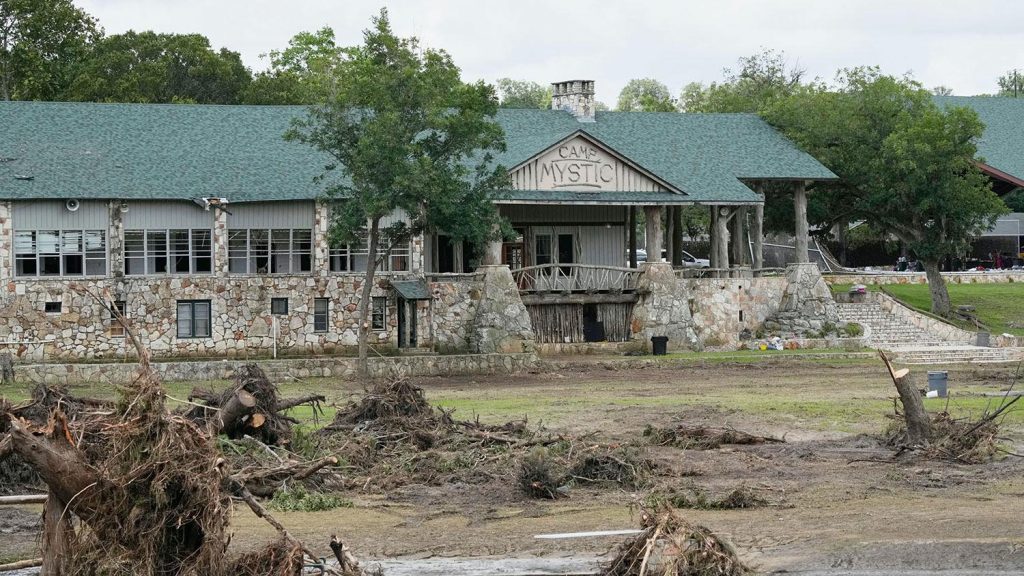
Camp Mystic filed for Chapter 11 bankruptcy reorganization on Wednesday, June 24, nearly a year after catastrophic floods killed 25 girls and two teenage counselors at the all-girls Christian camp in Texas.
On June 18, 2026 a 115 page report pieced together findings about Camp Mystic and how they did not have state-required written emergency plans or adequate evacuation measures that could have prevented the deaths in last year’s July 4 flood, state-appointed investigators told the state lawmakers in their final report released on June 18, 2026. .
Casey Garrett and Michael Massengale, hired by the Texas Legislature to conduct a probe of the flood response, said cascading failures led to the tragedy, from communication lapses between state and local authorities to lackluster instructions to counselors about how to safely evacuate in the event of a flood beyond haphazard planning by the camp’s director, Richard Eastland, who also died in the flood while trying to rescue campers.
“And when disaster struck, and it did strike on July 4 of last year, it may as well have been no plan at all,” Massengale said.
The investigators’ report concluded:
- Camp Mystic did not have written emergency plans that complied with the state’s requirements. Investigators said camp leadership didn’t have state-approved emergency plans posted in each cabin for counselors and campers, other than instructions to shelter in place. “Staff members and counselors were not assigned any responsibilities in the event of that kind of an evacuation. This was a fatal error,” Massengale said.
- Camp Mystic did not adequately prepare for the storm: The camp had received weather alerts warning of a storm on July 3, investigators said. Camp Mystic “had the means to inform itself and to appropriately protect its campers from severe weather,” Massengale said. “Our investigation showed that apart from what Dick Eastland was likely doing, nobody else at the camp was watching that night.”
- Camp Mystic did not evacuate in advance of the storm, despite ample opportunity to do so: At 1:14 a.m., investigators said, the National Weather Service sent a flash flood warning. Eastland called his son, Edward, for help shortly after 3 a.m., investigators said. In that time, investigators said the campers could have been instructed to evacuate to higher ground.
- Camp leadership confiscated counselors’ cellphones while on site, the report found, and did not provide them with replacement equipment, such as a radio or handheld transmitter that they could have used in an emergency.
- The camp normally employed three counselors per cabin but reduced the number to two in certain cabins. A senior counselor expressed to the camp’s leadership that some of the younger teenaged staff struggled to keep up with their cabins and needed assistance. The report said that having older, more experienced counselors at the camp could have helped prevent more deaths.
- The reunification efforts and incident management after the storm were chaotic, which led to campers’ parents being “unnecessarily traumatized” by incomplete and conflicting information as they waited to learn whether their children survived.
In paperwork filed with the U.S. Bankruptcy Court in the Southern District of Texas in Houston, the camp listed its debt as more than $10 million. The camp along the Guadalupe River said it had assets in the range of $100,001 to $500,000.
Families of the victims filed a lawsuit in November seeking more than $1 million in damages, saying the camp operators failed to take the necessary steps to protect the girls as life-threatening floodwaters approached on July 4.
In April of 2026 evidentiary hearings were held and Camp Mystic officials had to answer for their actions before, during and after the flood took over the camp. The Joint 2025 Flood Investigative Committee brought forth that Camp Mystic had filed an application to reopen for the 2026 season, noting they still had 27 deficiencies on their application. Legislative investigations also revealed the camp’s lack of detailed planning for a flood emergency and its reliance on poorly trained staff. Camp Mystic halted plans to reopen this summer in the face of outrage from victims’ families and lawmakers that the century-old camp intended to welcome girls back while lawsuits and investigations remained ongoing. Immediately following the hearings camp officials withdrew their application to reopen.
Families of the victims packed the hearings, often wearing “Heaven’s 27” pins with photographs of their daughters. They listened to the details of missed flood warning signs, the descriptions of the flood and the decision to leave the girls in their cabins until it was too late. Testimony included video of the raging floodwaters as a girl repeatedly screamed for “help!” somewhere in the distance
It was also made known, during the hearings, that Camp Mystic Chief Health Officer, Mary Elizabeth Eastland, had still not filed the death notices with Texas Department of State and Health Services as required by law. Those notices are required to be reported within 24 hours of the deaths but remained unreported even though it was nearly 10 months later. But investigators noted those deaths have now been reported.
The tragedy at Camp Mystic has brought camp safety to the forefront for many legislators who are taking actions to make sure that the lack of safety measures are not overlooked at other camps in the State of Texas. The joint committee said the Legislature addressed all but one of the deficiencies outlined in the investigators’ report by passing a series of laws last year. They promised to address the remaining problem — the inability of camp counselors to reach the camp’s owners during the flood — in the next legislative session that begins in January.
Under this filing of Chapter 11 bankruptcy, Camp Mystic will be under a reorganization process that allows them to restructure debts while maintaining operations. Camp Mystic will remain in control of assets as “debtors in possession” while proposing a court-approved plan to repay creditors over time. Filing for Chapter 11 bankruptcy in Texas immediately triggers an automatic stay. This powerful federal injunction halts most pending lawsuits and collection efforts against the debtor. However, it does not permanently shield you from all legal action, and exceptions do apply.